
Call us now :08045802108
 Send Inquiry
 Send Inquiry
ROUGHNESS COMPARATOR
Price 1 INR/ Piece
MOQ : 1 Piece
ROUGHNESS COMPARATOR Specification
- Equipment Type
- Roughness Comparator
- Specimen Size
- Approx. 25 x 75 mm per strip
- Response Time
- Immediate
- Power Supply
- Not required (mechanical device)
- Hardness
- Hardened steel/aluminum sample strips
- Mounting Type
- Handheld
- Automation Grade
- Manual
- Test Range
- Ra 0.025 - 6.3 m
- Resolution
- Limited by comparator increments
- Application
- Industrial
- Humidity
- Suitable for indoor laboratory conditions
- Display Type
- Physical surface blocks/plates
- Accuracy
- Visual/matching comparator (relative, no gauge)
- Measuring Range
- Ra 0.025 - 6.3 m (varies with set)
- Max Height
- Approx. 10 mm
- Features
- Multiple surface finish standards, pocket-sized case
- Temperature
- Ambient (10C to 40C)
- Number of Specimens
- 12 to 30 specimens (depending on set)
- Usage
- Surface roughness reference/comparison
- Machine Weight
- Lightweight (Pocket-friendly, ~200g)
- Test Speed
- N/A (Manual comparison)
- Test Width
- Up to 63 mm
- Control Mode
- Manual
- Case Type
- Protective plastic or leather case
- Identification Marking
- Laser-marked surface values and procedure
- Finish Types Included
- Ground, milled, planed, turned, shaped, bored, reamed, lapped, honed
- Material Type
- Stainless steel/Aluminum (corrosion-resistant)
About ROUGHNESS COMPARATOR
This set consists of 30 comparison specimens, covering six of the most commonly-used machining methods: 6 cylindrically turned, 6 end-milled, 6 horizontally milled, 6 surface-ground, 3 lapped, 3 reamed/drilled..25 LtrA
Corrosion-Resistant Durability
Manufactured from robust stainless steel or aluminum, these comparators resist corrosion and withstand industrial or laboratory use. The precision-machined sample strips maintain their integrity, providing reliable performance for long-term surface roughness assessment.
Wide Range of Surface Finishes
Each set features between 12 to 30 specimens, covering finishes from ground to honed. This diversity allows technicians to assess and match a variety of machining processes, making this tool adaptable to multiple applications in quality control and machining validation.
Portable and User-Friendly
Weighing roughly 200 grams and packaged in a protective case, the comparator is easy to carry and use in the field, workshop, or laboratory. Its mechanical, manual operation means no need for power or extra calibration-just select, compare, and reference instantly.
FAQ's of ROUGHNESS COMPARATOR:
Q: How do I use a roughness comparator for surface assessment?
A: Hold the desired comparator specimen next to the machined workpiece and visually or tactilely compare the surface textures. Match the finish closest to your sample to estimate the Ra value.Q: What materials are the roughness comparators made of?
A: These comparators are made from corrosion-resistant stainless steel or aluminum, making them suitable for demanding industrial or laboratory environments.Q: When should I use a roughness comparator?
A: Use a roughness comparator whenever you need a quick, visual reference for verifying or comparing the surface finish of machined parts, such as during manufacturing, inspection, or quality control processes.Q: Where can the roughness comparator be used effectively?
A: It's designed for indoor laboratory or workshop settings and is suitable for environments with ambient temperatures (10C-40C) and controlled humidity.Q: What is the process for identifying the correct surface finish using this tool?
A: Select a comparator strip with the desired process (e.g., milled, turned) and Ra value, and compare it directly against your workpiece to quickly determine the finish quality.Q: What are the benefits of using a physical roughness comparator over a digital gauge?
A: Physical comparators provide immediate, power-free visual assessment, require no calibration or batteries, and are highly portable-making them ideal for field or workshop use in environments where digital instruments might be impractical.Q: Who can supply or provide support for roughness comparators in India?
A: As distributors, manufacturers, service providers, and suppliers in India carry these roughness comparator sets, you can source them locally for prompt delivery and support.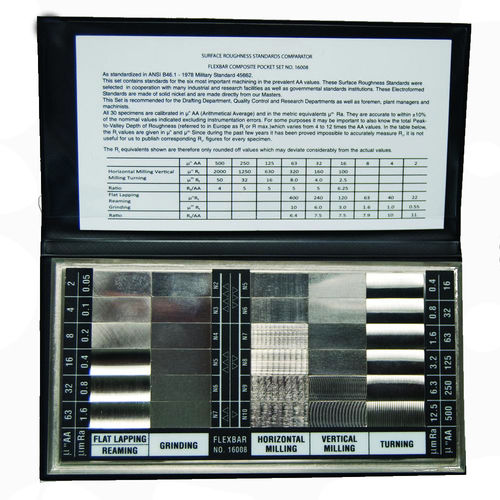
Tell us about your requirement

Price:
Quantity
Select Unit
- 50
- 100
- 200
- 250
- 500
- 1000+
Additional detail
Mobile number
Email

More Products in 13 PRECISION & TESTING INSTRUMENTS Category

Industrial Techno Meter
Usage : Measuring Rotation Force in Industrial Components
Application : Industrial Torque Testing
Control Mode : Automatic
Features : Overload Protection, Real Time Data Output

DFT Meter
Usage : Paint & coating thickness measurement
Application : Ferrous (Fe) and NonFerrous (NFe) metal coating thickness measurement
Control Mode : Manual & Automatic
Features : Automatic recognition of substrate (Fe/NFe), battery indicator, hold function
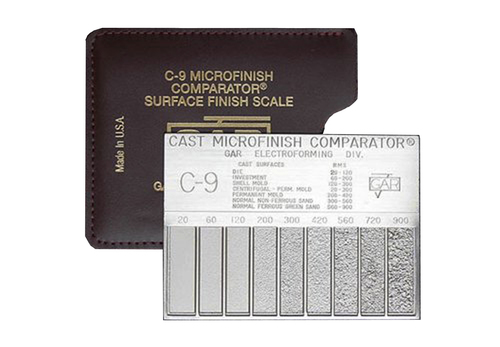
Surface Roughness Comparator
Price 1 INR / Piece
Minimum Order Quantity : 1 Piece
Usage : Surface roughness comparison
Application : Industrial
Control Mode : Manual
Features : Portable, easy to use, reference for multiple finishes
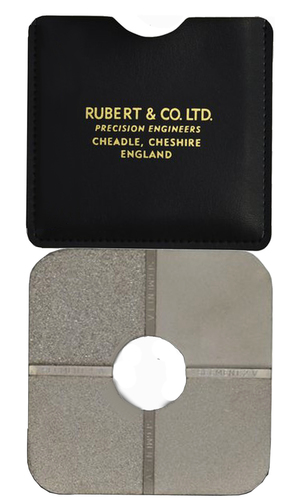
Roughness Comparator for Visual and Tactile Assessment of Surface Profiles
Price 1 INR / Piece
Minimum Order Quantity : 1 Piece
Usage : Surface roughness comparison
Application : Industrial
Control Mode : Manual
Features : Portable, Durable, Easy to use, Reference master

 Send Inquiry
Our Products
- 01 STEEL BAR MACHINERY
- 02 Concrete & Block Making Machines
- 03 CONCRETE VIBRATORS
- 04 Road Machinery
- 05 Material Handling Equipments
- 06 Scaffolding Products & Ladders
- 07 Welding, Wood-Working & Fabrication
- 10 SOIL TESTING EQUIPMENTS & SURVEYING INSTRUMENTS
- 11 MOTORS
- 11 ENGINES
- 11 PUMPS
- 12 BEARINGS, M.S. & S.S. PIPES & BARS
- 13 PRECISION & TESTING INSTRUMENTS
- 14 INDUSTRIAL MACHINERY
- 17 AGRICULTURAL EQUIPMENTS
- 18 SAFETY EQUIPMENTS
- 19 M.S., S.S. & GRP FABRICATED PRODUCTS
- 21 TUNNEL BORING MACHINE & ACCESSORIES


GF-19, Jaydeep Tower, Near Shreyas Crossing, Paldi,Ahmedabad - 380007, Gujarat, India

Mr. Bhushan
(Partner)
Mobile :08045802108
 Send Inquiry
 Send SMS
Developed and Managed by Infocom Network Private Limited.
